The Day Everything Changed: Margaret's Story of Hope, Home, and Healing
What Home Care Actually Looks Like (Spoiler: It's Not What You Think)
2/4/20267 min read
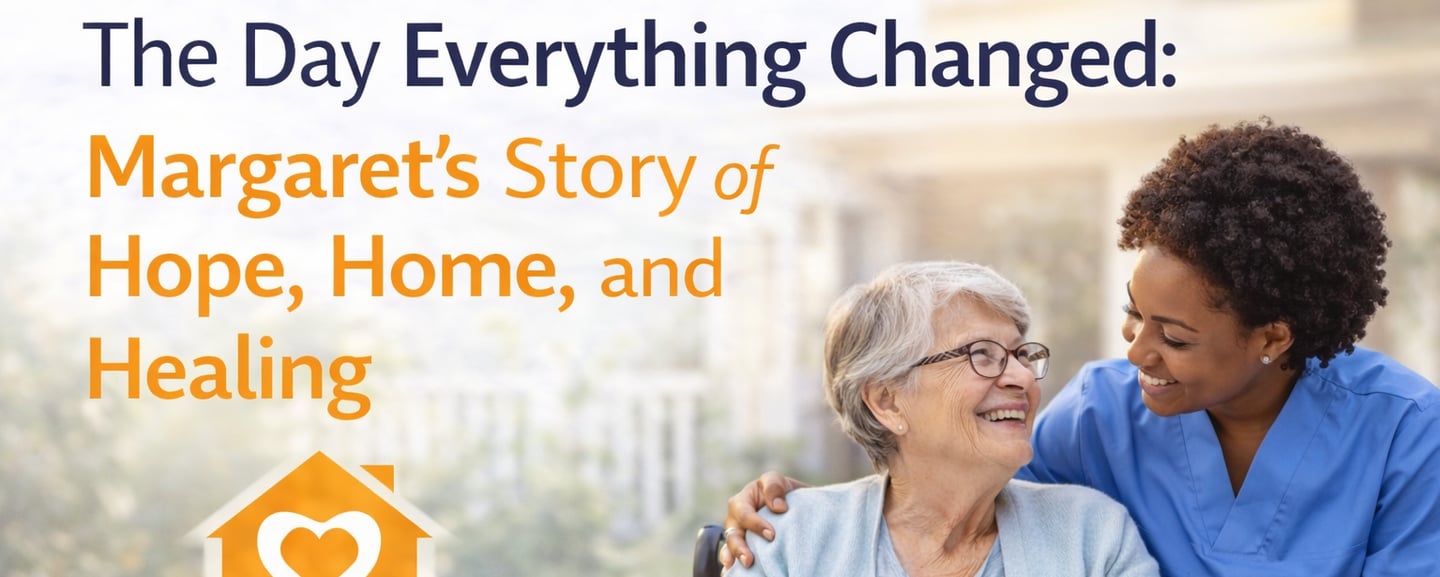
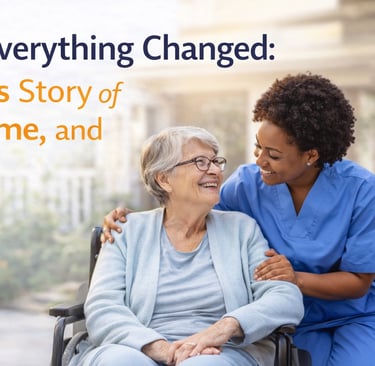
A 78-year-old grandmother's journey from hospital bed to baking cookies with her grandchildren—and why home care made all the difference
Margaret Chen hadn't been in her own bed for 47 days.
The stroke happened on a Tuesday morning while she was watering her orchids—the ones she'd carefully tended for over a decade in the sunlit corner of her Houston living room. One moment she was admiring a new bloom, the next she was on the floor, unable to call for help.
Her daughter Lisa found her three hours later.
When "Getting Better" Feels Impossible
The hospital saved Margaret's life. The rehabilitation facility helped her relearn basic movements. But sitting in that sterile room on day 47, watching other patients shuffle past her door, Margaret had lost something hospitals can't measure on a chart: hope.
"Mom just... stopped trying," Lisa told me when we first met. "The physical therapists would work with her, but the moment they left, she'd stare at the ceiling. She wouldn't even look at pictures of her grandkids."
Sound familiar? If you've ever watched a loved one struggle through recovery in an institutional setting, you know this heartbreak. The slow erosion of personality. The vacant stares. The person you love fading into someone you barely recognize—not from illness, but from disconnection.
The Question That Changes Everything
On day 48, a nurse asked Lisa a simple question: "Have you considered bringing your mom home?"
Home? Lisa's first thought was panic. I can't do this alone. I work full-time. I have three kids. I don't know how to manage medications, wound care, physical therapy...
But then came the nurse's second sentence: "You don't have to do it alone."
That's when Lisa called Francis Optimus Care Solutions.
What Home Care Actually Looks Like (Spoiler: It's Not What You Think)
When most people hear "home healthcare," they picture an overwhelmed family member struggling to remember which pill goes when, or a stranger showing up once a week to check vital signs.
The reality? It's nothing like that.
Three days after Margaret returned to her Houston home, I visited to see how she was adjusting. What I witnessed wasn't just healthcare—it was transformation.
7:30 AM: Sarah, Margaret's registered nurse, arrived with a warm smile and Margaret's favorite chai tea latte. While helping Margaret with her morning routine, Sarah checked her blood pressure (stable), reviewed overnight notes from the monitoring system (no concerning events), and prepared her medications—all while chatting about Margaret's orchids.
"The white one is about to bloom," Margaret said softly. Her first full sentence in days.
10:00 AM: James, the physical therapist, set up a simple exercise station in Margaret's living room. Instead of generic hospital equipment, he used items meaningful to Margaret: reaching for her favorite teacup, stepping toward her orchid shelf, practicing balance while "cooking" at her kitchen counter.
"We're not just rebuilding strength," James explained. "We're rebuilding the life she loves."
2:00 PM: Margaret was napping when I arrived, but Lisa was eager to talk. "Look at this," she said, showing me an app on her phone. Real-time updates from every caregiver. Medication logs. Therapy progress notes. Direct messaging with the nursing team. "I'm at work right now, but I can see everything. And if there's any concern, I get an alert immediately."
6:00 PM: Dinner with family. Margaret's grandson brought homework questions. Her granddaughter showed off a dance routine. And Margaret—still recovering, still working hard—was present in a way she hadn't been in almost two months.
The Science Behind Why Home Works
Here's what researchers have discovered about recovery at home versus institutional care, and the numbers are striking:
Patients recovering at home experience 30% fewer complications than those in facilities. They're 40% less likely to require rehospitalization within 30 days. Depression and anxiety scores drop significantly within the first week of home-based care. And perhaps most importantly, patients report feeling "like themselves again" much faster.
Why? Your home isn't just a location—it's wrapped in meaning. The smell of your own coffee. Your favorite chair positioned just right. Photos that make you smile. Sounds that comfort you.
Healing isn't only physical. It's emotional, psychological, and deeply personal. Clinical excellence matters, but so does the grandson's laughter echoing through your hallway.
The Moments That Matter Most
Six weeks after returning home, Margaret invited me over to see something special.
She was standing in her kitchen—standing!—rolling out dough for her famous almond cookies.
"My grandkids are coming over," she explained, her movements still deliberate but confident. "I haven't made these since..." She paused, eyes glistening. "Since before."
Lisa stood nearby, not hovering, just present. "I thought we'd lost her," she whispered to me. "Not to the stroke, but to what came after. This—" she gestured at her mother, at the kitchen alive with purpose, "—this is Mom."
Sarah, the nurse who'd brought that first chai latte, was checking Margaret's incision site while chatting about holiday plans. James had graduated Margaret from formal physical therapy but still called weekly to check in. The wound care specialist had signed off two weeks earlier, amazed at the healing rate.
"Want to know the secret?" Margaret asked me, pressing a cookie cutter into the dough. "When you're surrounded by people who see you—not just a patient, not just a problem to solve—you remember who you are. And when you remember who you are, you remember why you're fighting to get better."
The Questions You're Probably Asking
"Isn't home care only for end-of-life situations?"
Not even close. Home healthcare serves people recovering from surgery, managing chronic conditions, regaining strength after illness, and yes, receiving hospice or palliative care. But the majority of home care patients are working toward recovery and increased independence.
"Can my family really handle this?"
You're not handling it alone—that's the entire point. Professional caregivers bring the expertise. Technology provides the safety net. And you bring what matters most: love, presence, and familiarity.
"What if there's an emergency?"
Modern home care includes 24/7 monitoring systems, direct communication with medical teams, and rapid response protocols. Many patients have wearable devices that detect falls, irregular heart rhythms, or other concerning changes before they become emergencies.
"How do we pay for this?"
Medicare covers home healthcare for eligible patients. So does Medicaid. Many private insurance plans provide coverage too. The out-of-pocket cost is often less than people expect—and significantly lower than extended facility stays.
Not Every Story Is Perfect (And That's Okay)
I'd be lying if I told you Margaret's recovery was smooth and easy.
There was the night her blood pressure spiked and Sarah had to coordinate with her cardiologist. The afternoon she fell reaching for something (the fall detector alerted Lisa within seconds, and Margaret was fine, just frustrated). The hard conversations about adapting her home for safety—modifications that felt like admissions of weakness until Margaret realized they meant freedom.
Recovery is messy. It's two steps forward, one step back. It's victories measured in small moments: tying your own shoes, making your own breakfast, walking to the mailbox without fear.
But here's what makes home care different: you face those challenges in a place filled with love, surrounded by people who know your name, your story, your favorite tea.
What I Learned From Margaret
Three months after that first cookie-baking session, I visited Margaret again. She was working in her garden, carefully pruning her orchids. Her movements were slower than before the stroke, more deliberate. But her smile? That was vintage Margaret.
"People keep asking if I'm back to normal," she told me, snipping a dead leaf. "But I don't want to be 'back to normal.' I want to be better than before—stronger, more grateful, more present."
She showed me the new orchid she'd just bought, a rare variety she'd been hunting for years. "I'm planting this for my great-grandchild," she said. "Lisa's daughter is pregnant. Due in May."
That's when it hit me: this isn't just about recovering from illness. It's about recovering your future.
Your Story Doesn't Have to Look Like Margaret's
Maybe you're reading this because your father is struggling after heart surgery. Maybe your spouse has Parkinson's and you're drowning in the complexity of care management. Maybe you're the patient, wondering if there's an alternative to the facility your doctor recommended.
Every situation is unique. Every family faces different challenges. Every recovery follows its own timeline.
But here's what I've learned from hundreds of families: healing happens faster when surrounded by love. Recovery is more complete when rooted in familiar spaces. And hope grows stronger when you're treated like a person, not a patient number.
Ready to Write Your Own Story?
If Margaret's story resonates with you, if you're wondering whether home care might be the right choice for your family, I want you to know something important: you don't have to have all the answers right now.
Start with a conversation. Ask questions. Express concerns. Share fears.
At Francis Optimus Care Solutions, we've learned that the best care plans begin with listening. We want to understand your situation, your loved one's needs, your family's capacity, and your hopes for the future.
Sometimes home care is the perfect fit. Sometimes it's part of a larger care strategy. And sometimes we'll help you discover resources and options you didn't know existed.
But it all starts with one step: reaching out.
Call us today for a free consultation. No pressure, no sales pitch—just honest conversation about whether home care could be right for you.
Because somewhere out there, there's another Margaret sitting in a hospital bed, losing hope.
And somewhere out there, there's another Lisa wondering if there's a better way.
Maybe that's you. Maybe today is day 48 of your story.
If so, let me ask you the question that changed everything for Margaret's family:
Have you considered bringing your loved one home?
Share Your Story
Have you or a loved one experienced home healthcare? What surprised you most about the journey? Share your story in the comments below—your experience might be exactly what another family needs to hear today.
And if Margaret's story touched you, please share this post. Someone in your network might be facing this exact decision right now.
At Francis Optimus Care Solutions, we believe healthcare should feel like coming home—because that's exactly where it happens. Serving Houston and surrounding communities with compassionate, expert, personalized care that honors your story.
📞 Ready to talk? Contact us for a free consultation: [Insert Contact Information]
💬 Questions? Drop them in the comments and our care team will respond personally.
🔔 Want more stories like Margaret's? Subscribe to our newsletter for weekly inspiration, practical caregiving tips, and real stories from real families.
#HomeHealthcare #SeniorCare #PatientStories #AgingInPlace #StrokeRecovery #HealthcareJourney #HoustonHealthcare #FamilyCaregiving #HealingAtHome #CompassionateCare